
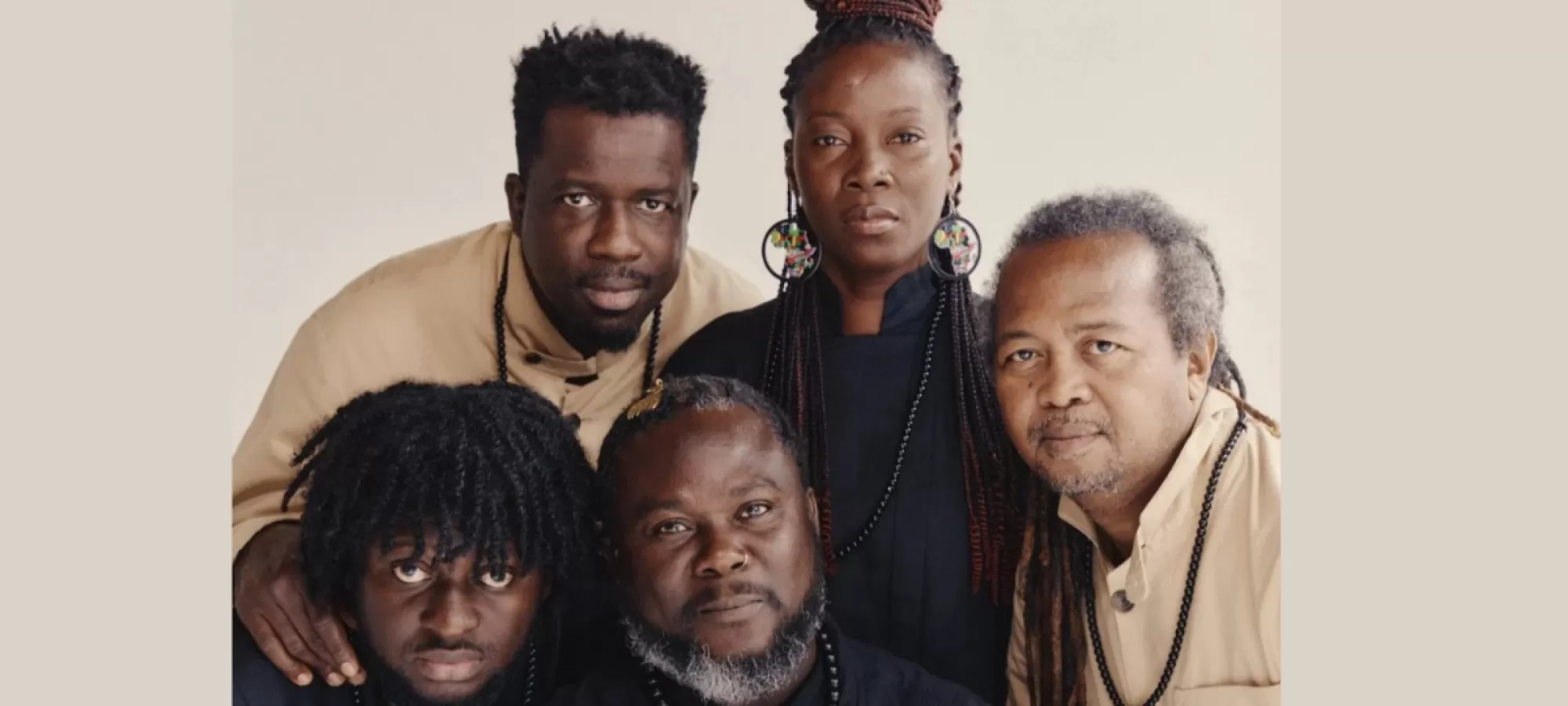
“Upbeat, danceable music from the Ghana-born and now Portland-based musician Okaidja Afroso.” - NPR
Making his San Francisco debut, Ghanian singer, percussionist, guitarist, and dancer Okaidja Afroso creates modern African music that effortlessly flows between tradition and innovation. With roots in the traditions of the Ga-Dangme people of Ghana and a spirit shaped by decades of global travel and collaboration, he invites audiences into a celebration of humanity’s shared rhythms with music that defies borders.
Àbor Édíŋ (Melanin Earth Garden in the Gãdangmé language of coastal Ghana) is the second chapter of Afroso’s Ancient Africa Wisdom Trilogy. Okaidja connects the listener with unfolding stories of the present and ceremonial stories of the past while looking into the future. Guitar, light percussion, bass, and vocals combine with Brazilian rhythms, touches of jazz, and complex arrangements to bring together wide and worldly influences.
Okaidja Afroso was born into a family of musicians and storytellers in the town of Kokrobite on the west coast of Ghana. He began his career as a dancer with the celebrated Ghana Dance Ensemble. As he toured internationally Okaidja expanded his artistic reach becoming a master multi-instrumentalist, singer-songwriter, and arranger. His uncle was the town’s notorious composer who spared no one with the songs he wrote about life in their small fishing village. Okaidja’s mother was a colorful lead singer in her spiritual church. Her powerful songs of praise earned her the name “the spiritual singer.” As a young boy Okaidja sang while he worked on fishing boats. The fishermen would sing a cappella songs as they worked, and Okaidja passed the long days learning the songs of the great sea.
“My music preserves my West African roots while embracing diverse cross-cultural influences and styles. I strive to create a rhythmic fusion of old and new that presents a fresh sound that preserves the authenticity of the traditional while embracing the rich complexity of the integrated world we inhabit today. In my workshops and performances I explore how my ancestor’s traditions have persevered and been reshaped in a contemporary version of the African oral tradition. The complex compositions, soulful vocals, and spirited dancing combine to create an unforgettable and unique experience.” - Okaidja Afroso
Performers
Okaidja Afroso - guitar, vocals
Janet Quaye - vocals dancer
David Rajaonary - bass guitar, vocals
Francis Osei - percussion, vocals
Samuel Marquaye - dancer, vocals